
Ashley Dirks, principal at Albert City-Truesdale Elementary in Iowa, recently told our partner success team something we often hear from school leaders, but she said it in a way that stuck with me.
“We want our students to truly enjoy reading. We want them to pick up a book. We always want to do everything possible to help our students make progress and grow their confidence as readers.”
That’s the goal, isn’t it? Not just a proficiency score. Confidence. Enjoyment. A kid who chooses to pick up a book on her own.
But getting there takes more than a good intervention program. Struggling readers need to recognize the value of reading as early as possible. The pleasure and knowledge that come from independent reading are exhilarating and motivate students to read more—eventually becoming self-driven readers. Teachers, administrators, and support staff can celebrate every bit of growth along the way.
Ashley and her team have been building that kind of schoolwide approach since they started using WordFlight. Along the way, she’s landed on five strategies I think are worth sharing with any school leader working to strengthen reading intervention.
1. Understand why students are struggling
Effective intervention isn’t one-size-fits-all. A fluency score can tell you that a student is struggling. It can’t tell you why.
Is it decoding? Accuracy? Automatic word recognition—the instant, effortless recall of a word that lets a reader stop sounding it out and start focusing on what it means? Each gap calls for different instruction and practice. Knowing which gap a student is facing is what turns an intervention from generic to targeted.
2. Build structures that make implementation sustainable
Teachers embrace a new program when it fits naturally into their day. They resist it when it feels like one more thing bolted onto an already full schedule.
At Albert City-Truesdale, WordFlight lives inside the school’s existing Multi-Tiered System of Supports (MTSS) intervention block. Teachers use it without giving up a single minute of core literacy instruction. Dedicated time. Clear expectations. Ongoing support. That combination lets teachers focus on teaching, not logistics. And a clear implementation plan from day one keeps a program running with fidelity instead of drifting off course.
When teachers see how WordFlight connects to the core instruction to provide students more access to foundational skills, and watch their increased engagement and motivation, they have more motivation, as do the students.
3. Leverage your implementation partner
This is the one I see schools skip most often. A close working relationship with your partner success implementation team or your technology provider’s customer service team can make teachers feel supported and prepared, not just handed a login and left to figure it out alone.
Take the training. Take the coaching. Encourage teachers to ask questions, raise challenges, and ask for help year-round, not just during onboarding. Regular contact with implementation specialists helps teachers refine what they’re doing in the classroom, troubleshoot the inevitable snags, and get more out of the program they’re already using.
4. Use data to guide instruction
Data should drive instructional decisions. It shouldn’t sit in a spreadsheet nobody opens.
Ashley makes a point of joining monthly data discussions with teachers, interventionists, and instructional coaches, not just reviewing a summary after the fact. Those conversations surface learning trends, flag students who need more support, and shape real adjustments to both small-group and whole-class instruction. Showing up for those conversations changes what actually gets acted on.
5. Celebrate student progress
Some students have never felt successful at reading. Not once. That’s worth sitting with for a second.
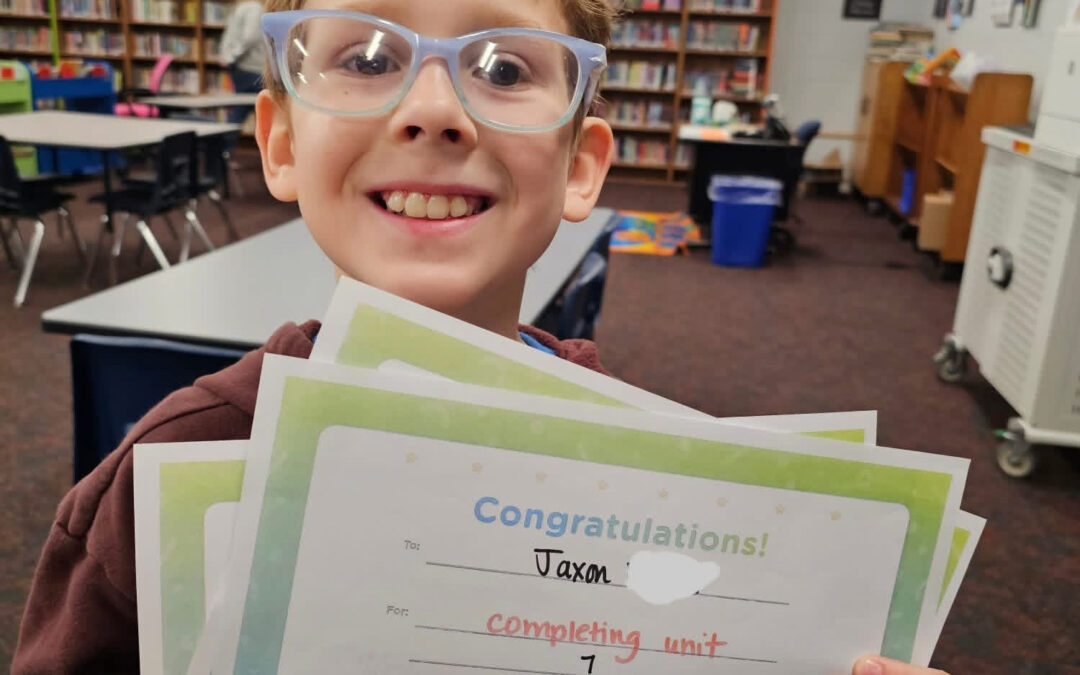
At Albert City-Truesdale, students are recognized early and often: Friday certificate presentations, classroom celebrations, hallway displays, and social media posts that bring families into the story. Here’s how Ashley put it:
“Students need to see that we see their progress. Some students may have never previously felt success in reading. We always want them to know we’re paying attention and we’re proud of the work they’re doing.”
That’s the part I don’t want you to skim past. Celebration isn’t decoration on top of the real work. It is part of the intervention. Success builds confidence that students can become readers and motivates them to realize this possibility. It all starts on day 1.
Their confidence and motivation are why they keep showing up to do something hard.
The strategies work together
None of these five strategies is a silver bullet on its own:
- Understanding the root cause
- Building sustainable structures
- Leaning on your implementation partner
- Following the data
- Celebrating growth.
Together, they turn a program into a schoolwide culture. A culture where every student gets the message that their progress matters, and that they belong in this work as much as anyone else.
That’s dignity and opportunity. And it deserves sharing.
We are continuing to learn how we can help support the conditions for success for students and schools. I’d love to hear what’s working for you and what you’re still figuring out.