By Carolyn Brown, Ph.D.
Introducing a new blog series from Carolyn Brown, where we learn about her origin story and how she became a notable literacy researcher and scientist…
I grew up on a farm in rural New Mexico, and I was a curious kid who noticed things. One of the things I noticed early on was that not all of my classmates had the same relationship with words that I did.
Many of my classmates didn’t speak English at home. Many lacked exposure to the kinds of books, stories, and dinner-table conversations that I later learned were part of the invisible foundation behind a child’s literacy development.
These students came to school with rich inner lives, sharp minds, and real curiosity, and yet, the gap between them and the printed page felt wide and, to my child’s eye, unfair.
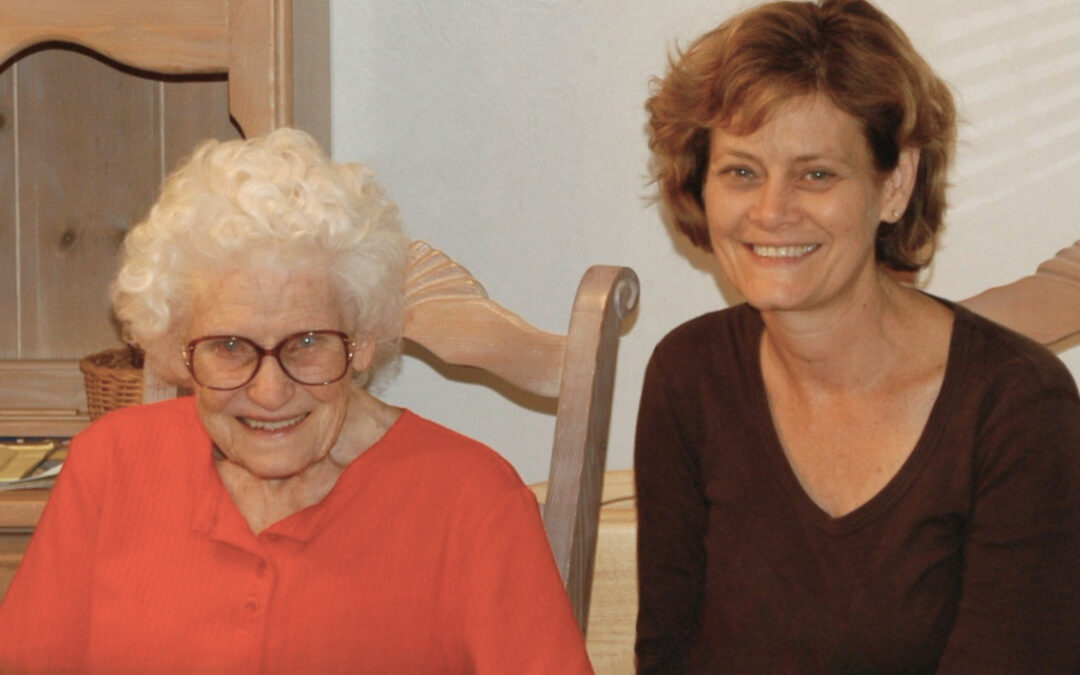
My mother saw it too. And she talked about it constantly.
My Mother’s Voice Has Never Left Me
She wasn’t an academic or a researcher. But she had a conviction I’ve never been able to shake: all children have equal potential as learners and deserve the best education and experiences possible to reach that potential. Not most children. All children.
She believed, specifically, that all children can learn to read—and that reading was a gateway. To the world. To opportunity. To the kind of empathy and curiosity and wonder that make a full life possible.
I’ve spent the last four decades learning that she was right; if we can find out what they need..
A Career Built One Question at a Time
After growing up in New Mexico, I made my way to the University of Iowa, where I focused my early research on something that fascinated me: how children learn to learn. Specifically, I explored inferential processing in young children. How do children make meaning, draw conclusions, and connect ideas?
That work cracked open a door for me, and I walked through it and never looked back.
I also met Jerry Zimmermann, who is now my husband and co-founder of three companies we’ve built together. Jerry is a research scientist, and the two of us share a relentless preoccupation with the same question: what science and practice does it actually take for a child to become a reader?
Together, we co-founded Breakthrough to Literacy, a blended literacy program for PreK–3 that reached schools across the country. Then the Iowa Language and Literacy Institute. And then, about a decade ago, we started noticing something that wouldn’t let us rest.
Something Was Still Missing
Even in classrooms that were doing everything “right,” such as using effective, evidence-based instruction, following the Science of Reading, students were still struggling.
Not all students, of course, but a persistent, heartbreaking subset: the kids most at risk, the most historically marginalized, the ones my mother would have fought hardest for.
They were learning their phonics rules. They were decoding. But they couldn’t get to fluency. They couldn’t read a passage and actually be present in it. They couldn’t make meaning, couldn’t connect, couldn’t enjoy it, because so much of their mental energy was still being consumed by the mechanics of reading individual words.
Jerry and I kept asking: What’s happening in the gap between knowing and doing? Between decoding and automaticity? Between instruction and fluency?
The answer, it turned out, wasn’t just about what students were being taught. It was about how they were learning, and how the brain actually builds the pathways needed for automatic, effortless reading.
Why We Built WordFlight
We founded Foundations in Learning in 2009, and for years we worked alongside world-class scientists and researchers from the University of Iowa’s Department of Psychological and Brain Sciences, as well as hundreds of students, teachers, and administrators.
We were digging into the Science of Learning. What we found was decades of research across multiple disciplines about how the brain builds automaticity in complex skills.
What we found changed everything for us. And it eventually became WordFlight.
WordFlight is an online instructional and assessment tool that uses the science of learning to help students move from basic reading skills to automatic word recognition—and from there, to fluency.
It provides individualized, systematically structured practice that meets each student exactly where they are. It gives teachers real visibility into where their students are in the journey from decoding to fluency, and what they can do about it.
And it works. We’ve seen more than 80% of struggling middle school students reach proficiency in foundational reading skills within a single school year.
We’ve watched teachers in high-poverty schools use WordFlight data to transform their instruction. We’ve received messages from kids who spent years believing they couldn’t read and then discovered they really could. It also works for those who struggle the most. It sometimes takes longer, but they can get there.
Why I’m Here, Writing to You
I’m not naturally a blogger. I’m a researcher, a scientist, a classroom observer. I’m most comfortable when I’m using data to work with a child (or adult) who struggles to read, or working with a teacher to interpret student results while incorporating her observations into a coherent, understandable framework for instruction and practice.
But I believe in this work with everything I have. And I’ve come to believe that the research, the results, and the “how” behind WordFlight deserve to be shared, not just in journals and conference rooms, but with the teachers, administrators, and parents who are living this every day.
So that’s what this blog series is for. We’ll dig into the science of fluency, explore what the research says about how children actually learn to read, share stories from classrooms, and talk honestly about what works and what doesn’t. You bring your observations and questions. I’ll bring a learning framework, data, and a place for ongoing dialogue. Together, we will learn how to close the gap between the science and the practice in classrooms.
My mother believed that all children can learn to read. I’ve spent my career trying to build the tools that make this a reality. I’m grateful to have this space to share that journey with you.
— Carolyn